Overview

Sierra Leone’s agribusiness sector is undergoing a significant transformation, driven by modernization efforts, crop diversification, and a national commitment to food security. Agriculture remains the backbone of the economy contributing over 50% of GDP, employing 65% of the workforce, and sustaining millions of rural households. With abundant natural endowments, including 5.4 million hectares of arable land, only 15% currently under cultivation, and high annual rainfall of 3,800 mm, Sierra Leone offers fertile conditions for large-scale farming and agro-processing. 

Traditionally rooted in staple food production such as rice and cassava, the sector is now expanding into higher-value segments including cocoa, coffee, horticulture, livestock, and agro-inputs. Driven by rising domestic demand, favourable ecological conditions, and international market opportunities, Sierra Leone is repositioning itself as an emerging agribusiness hub in West Africa. Recent national reforms under the National Agricultural Transformation Programme (NAT 2023) prioritise productivity increases, private-sector participation, technological adoption, and climate-smart agriculture, creating a more enabling environment for investors 
Economic Contribution 

Agriculture plays a central role in Sierra Leone’s economic landscape, underpinning food supply, employment, and export potential. The country spends around USD 455 million on food imports but exports only USD 120 million, reflecting strong opportunities for domestic substitution and value-added processing. The sector is deeply integrated into the wider economy through activities such as logistics, agro-processing, packaging, distribution, and forestry. 

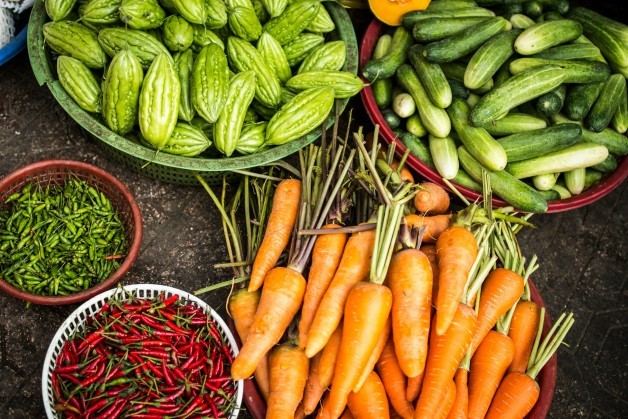
Sierra Leone possesses competitive advantages in several cash and food crop value chains. Cocoa already a major export, earner benefits from a documented comparative advantage, while horticultural crops such as pineapples, mangoes, and vegetables demonstrate yields that outperform regional peers. The growing demand for livestock products further strengthens opportunities in meat processing and feed production. 

Increasingly, agribusiness operators are adopting improved inputs, mechanization, and modern processing systems, supported by government smart subsidies and favourable trade regimes. The country’s preferential access to ECOWAS, the EU (EBA), and AGOA enhances export competitiveness and expands market reach for Sierra Leonean products 

Outlook 

Sierra Leone is well positioned to accelerate the modernization and expansion of its agribusiness sector. Government priorities include achieving rice self-sufficiency, promoting crop diversification, modernising livestock production, improving the regulatory environment, and scaling climate-resilient and sustainable farming systems. Infrastructure upgrades including improvements at Lungi International Airport, the Port of Freetown, and the national road network reinforce the country’s connectivity and investment attractiveness. 

Strong opportunities exist across the agricultural value chain, particularly in rice and cassava production, cocoa and oil palm processing, horticulture for off-season European markets, livestock and meat processing, and agro-inputs such as seeds, fertilisers, mechanization and post-harvest technologies. Combined with a cost-competitive labour force and increasing domestic consumption, Sierra Leone offers a compelling platform for investors seeking to develop resilient and value-added agribusiness operations for both domestic and export markets.