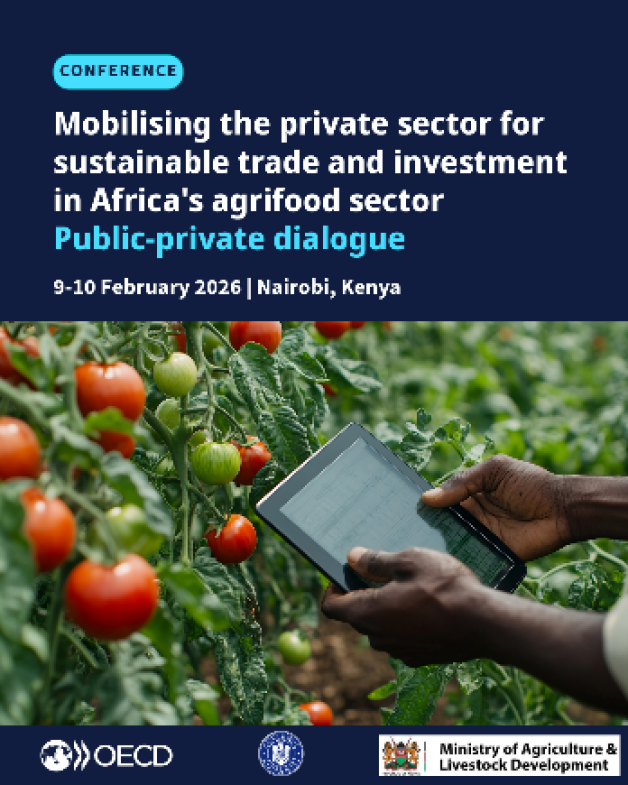
Africa’s agriculture and food sectors are crucial for economic growth, contributing about 20% to GDP and employing approximately 60% of the labor force. However, the potential of these sectors is often hampered by significant challenges, including the need for reforms to improve the business and investment climate. These challenges are exacerbated by infrastructure inadequacies; roughly 600 million people do not have access to reliable electricity and only 34% of the rural population has access to all-weather roads. Finance is another important constraint, with an annual funding gap of USD 40 billion to secure food security and improve productivity in Africa. Currently, only around 10% of smallholder farmers in Africa have access to credit.
Various regional initiatives are designed to create partnerships to address these challenges. The Comprehensive Africa Agriculture Development Programme (CAADP) of the African Union calls for commitment from each government to dedicate 10% of its budgets to the agricultural sector. As highlighted by the African Union, enhancing agrarian growth is vital for poverty reduction, aiming to halve the number of people living in extreme poverty in Africa by 2030. Engaging in meaningful dialogue will help align the interests of both public and private sectors, ultimately driving growth, food security, and innovation across the continent.
The entering into force and the implementation of the African Continental Free Trade Area (AfCFTA) also provides opportunities to enhance regional trade and investment in Africa's agrifood sector. By creating a unified market across 55 African countries, the AfCFTA seeks to lower trade barriers, enhance market access, and promote economic integration, which are crucial for the agrifood sector and mobilising private sector investments. The agreement is expected to enhance intra-African trade, promote agricultural productivity and attract investment, thereby contributing to sustainable economic growth and food security across the continent.