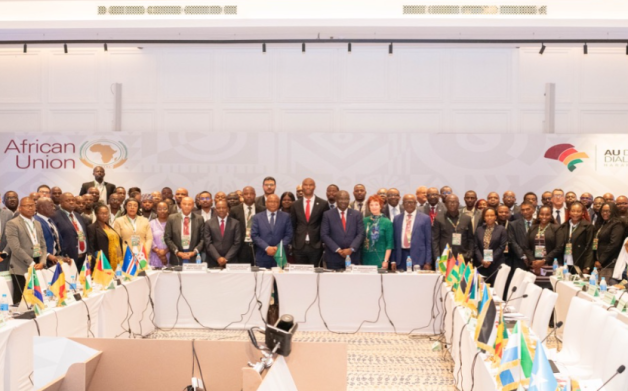
The African Union Dialogue on Debt Sustainability and Debt Reform opened on 1 July 2026 in Harare, Zimbabwe, under the theme: “From Crisis Response to Sustainable Financing: Implementing the Common African Position on Debt.”
Organized by the African Union Commission (AUC), in collaboration with its institutional partners, the high-level Dialogue brought together policymakers, African and international financial institutions, development partners, and experts to identify concrete solutions to the growing public debt burden across the continent.
Against the backdrop of growing fiscal and debt pressures across the continent, the Dialogue underscored the need to move beyond reactive debt crisis management towards a coordinated, development-oriented approach that supports sustainable economic growth and resilience.
The opening ceremony featured high-level remarks from representatives of the African Union Commission, the African Development Bank (AfDB), the Reserve Bank of Zimbabwe, the African Capacity Building Foundation (ACBF), and the Macroeconomic and Financial Management Institute of Eastern and Southern Africa (MEFMI). The event was officially opened by the Minister of Finance, Economic Development and Investment Promotion of Zimbabwe.
In her opening remarks, H.E. Francisca Tatchouop Belobe, Commissioner for Economic Development, Trade, Tourism, Industry and Minerals (ETTIM), encouraged open engagement, technical rigor, and result-oriented outcomes in the implementation of the Common African Position on Debt, in collaboration with Member States and relevant stakeholders, in furtherance of Agenda 2063, “The Africa We Want.”
Delivering his opening address, H.E. Dr. Mthuli Ncube, Minister of Finance, Economic Development and Investment Promotion of the Republic of Zimbabwe, stated that the Common African Position on Debt was founded on the principle that Africa must engage the global debt architecture with one coordinated and united voice, while ensuring that debt served as an instrument for development, structural transformation, and climate resilience rather than a constraint on growth.
Prof. Kevin Urama, Vice President of the African Development Bank, stressed that Africa’s debt challenges required action at both the international and domestic levels. He called for stronger economic diplomacy and reforms to the global tax and financial architecture, including more effective engagement with credit rating agencies.
In the same vein, Mr. Mamadou Biteye, Executive Secretary of the African Capacity Building Foundation (ACBF), described Africa’s debt crisis as a continental challenge that required coordinated action by national institutions, African organizations, and development partners.
Following the opening ceremony, participants engaged in a High-Level Panel Discussion on implementing the Common African Position on Debt, contained in the Lomé Declaration. Further discussions were made on African-led to strengthen debt management, expand access to affordable financing, and reinforce Africa's collective negotiation power.
On the third and final day, Member States representatives adopted the Harare Declaration which formally establishes the Debt Management Offices (DMO) Network, a continental platform envisioned to strengthen debt management capacity, promote peer learning, and facilitate Africa’s coordination on debt-related matters. Furthermore panel discussions were held on practical measures to expand access to affordable financing and reviewed progress towards the operationalization of the African Financing Stability Mechanism (AFSM). The Dialogue concluded with the adoption of recommendations aimed at strengthening debt sustainability, improving access to development finance, and reinforcing Africa's collective voice in global financial governance.
The Dialogue concluded, with participants reaffirming their commitment to translating the Common African Position on Debt into concrete action to advance debt sustainability, expand access to affordable financing, and support Africa's long-term development objectives. The adopted recommendations are expected to strengthen coordination among Member States, African institutions, and development partners, while reinforcing Africa's collective voice in shaping a more equitable and responsive global financial architecture.
This press release was issued by the African Union: African Union advances implementation of the Common African Position on Debt at High-Level Dialogue in Harare | African Union