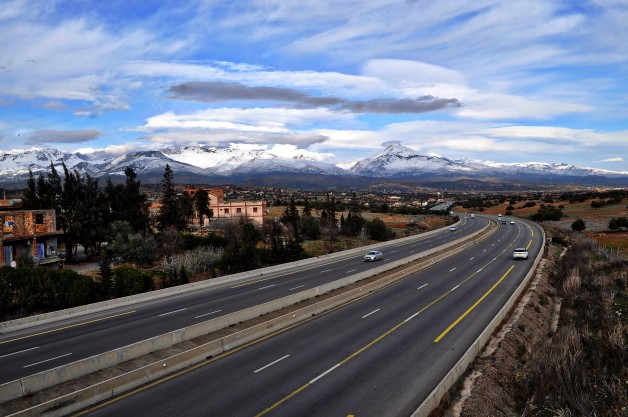
Transport and logistics play a fundamental role in Algeria’s economic integration and competitiveness. The country has an extensive network of more than 128 000 km of roads including over 7 000 km of highways such as the 1 216 km East West Highway, and more than 4 500 km of railways with planned extensions to mining basins and border regions. Algeria also operates 11 major commercial ports that handle the vast majority of external trade. New logistics hubs, dry ports and multimodal platforms aim to improve trade flows but the system still faces challenges including limited intermodal integration, customs delays, port congestion, insufficient storage facilities and weak rural connectivity.
About
Image
Economic Contribution
Transport and logistics represent around 10% of GDP. Ports handle over 100 million tons of goods annually and more than 90% of the country’s international trade. Logistics costs are high at 20 to 25% of product value, significantly above global averages and Algeria’s Logistics Performance Index score of 2.34 reflects structural inefficiencies. Port congestion, administrative delays and poor rural road quality increase costs, reduce export competitiveness and contribute to post harvest losses of 20 to 30% for perishable agricultural products.
Outlook
Government priorities include modernizing the ports of Algiers, Oran and Skikda, expanding the railway network to over 6 000 km, developing logistics platforms and dry ports, improving rural roads, simplifying customs operations and upgrading cross border corridors with Tunisia, Niger and Mauritania. Improved transport and logistics efficiency will reduce business costs, enhance industrial and agricultural competitiveness and position Algeria as a key Mediterranean trade and logistics hub.