Available in
Related countries
Introduction
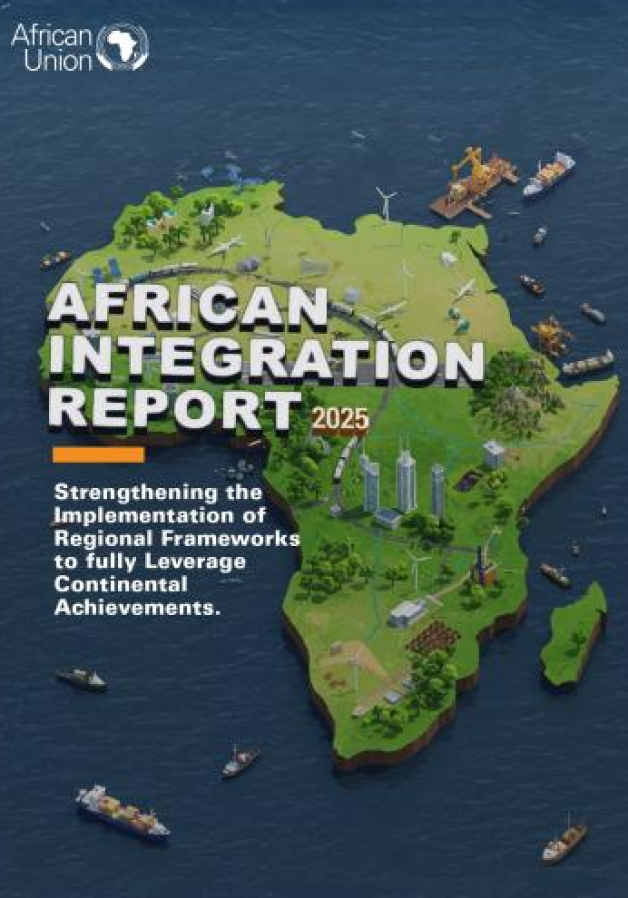
The 2025 African Integration Report presents a comprehensive assessment of the state and progress of regional integration across the African continent. The report is a complete tool intended to track Africans' progress on the trail to continental unity. It observes the continent's efforts to remove borders, complement policies, and reinforce harmony among the social, political, and economic dimensions. It is Jointly developed by the African Union Commission (AUC), the United Nations Economic Commission for Africa (ECA), and the African Development Bank (AfDB), with active participation from the Regional Economic Communities (RECs), the report analyzes and measures the progress of regional integration across Africa through four essential pillars and eleven dimensions divided in sub-dimension aligned with the guiding framework of the Abuja Treaty, Agenda 2063, and the African Continental Free Trade Area (AfCFTA).
The report reveals that integration is not only a political aspiration, but also an economic and societal obligation. United Africa promises to enhance intra-African trade, drive industrialization, and boost the African continent's bargaining power in global affairs. The report concedes the constant difficulties that slow the progress. Some of them are: uneven implementation of agreements, barriers to the movement of goods, services, capital, and people, and inadequate infrastructure. The report serves as a mirror and guide, aside from an update highlighting the progress, what is lagging, and also the corrective measures to take to preserve Africans' long-term vision of Agenda 2063 and the African Continental Free Trade Area (AFCFTA) to become a reality rather than an idea. The report is turning the vision into an action by helping businesses, policymakers, and citizens to understand the opportunities and struggles in building a united continent.
The 2025 African Regional Integration (ARI) has the following key feature: Inclusion of Updated Data: Reflecting the most recent statistics from national and regional sources. Improved Methodology: Strengthened data harmonization and validation processes through collaboration with RECs and technical experts, and enhanced Digital Platform: Launch of ASRII online dashboard to visualize trends, rankings, and performance.
Objectives of the report
Examine the effective implementation of projects and their impacts on regional communities
Monitor and track the performance of countries and RECs in implementing regional integration commitments.
Support evidence-based policy making, enabling stakeholders to identify gaps, target reforms, and share good practices.
Reinforce the role of regional integration as a driver of economic transformation, resilience, and continental unity in the face of global shocks.