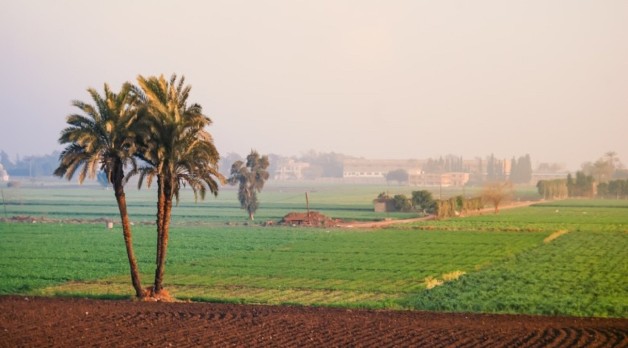
Egypt’s agricultural system is centered on intensive irrigation along the Nile Valley and Delta, enabling high-value cultivation of wheat, maize, rice, vegetables and horticulture products. Despite strong agro-ecological potential, the sector faces constraints such as land scarcity, water stress, limited mechanization in some regions and significant post-harvest losses. Food processing capacity remains insufficient to meet the needs of a fast-growing population, resulting in high import dependency for essential commodities including wheat, edible oils and animal feed. National strategies prioritize modernization of irrigation, expansion of controlled-environment horticulture, strengthening of seed systems and development of agro-industrial zones to reduce import dependence and improve food security.
Overview
Economic Contribution
Agriculture, forestry and fishing accounted for roughly 13.7% of GDP in 2024 and remain a major source of rural employment. Egypt continues to import more than 60% of its wheat consumption, illustrating the gap between domestic production and demand. Horticulture is among the strongest agricultural export segments, but limited cold-chain infrastructure and inadequate processing reduce overall value capture. Expanded agro-industrial processing could significantly reduce the food import bill, stabilize domestic markets and boost rural incomes.
Outlook
Future priorities include scaling up greenhouse horticulture, rehabilitating irrigation systems, expanding grain storage, improving milling and feed manufacturing, and developing agro-processing capacity for fruit, vegetables, dairy and meat products. With rising domestic demand and increasing regional export opportunities, Egypt is well positioned to strengthen food production and develop a robust agro-industrial base.